China’s titanium implant industry has moved from low-cost production toward precision engineering, clinical validation, and global regulatory awareness. This shift makes a “Top 10” list more complicated than a simple sales ranking. Titanium Implants are medical devices, not ordinary metal components. Their quality depends on alloy purity, surface treatment, thread design, sterility, packaging, and long-term clinical evidence.
Professor Per-Ingvar Brånemark, widely recognized as the father of modern osseointegration, described the goal as “a direct structural and functional connection between ordered, living bone and the surface of a load-carrying implant.” That principle still guides serious evaluation today. A polished brochure cannot replace evidence. Neither can a low quotation.
This introduction examines ten notable Chinese manufacturers through practical criteria. These include manufacturing experience, ISO 13485 systems, product traceability, research capability, export performance, and support for dentists and distributors. The review also considers implant geometry, titanium grades, surface roughness, abutment compatibility, and sterilization controls. Small details matter. A poorly documented batch can create major clinical uncertainty.
The ranking should not be treated as universal truth. Different clinics need different implant platforms, and public information is sometimes incomplete. That limitation deserves attention. Some manufacturers may have strong factories but limited published clinical data. Others may offer excellent research while serving narrower markets. Readers should verify current certificates, registration status, warranty terms, and independent clinical evidence before making purchasing decisions. This list offers direction, not a substitute for professional judgment.
Titanium implants are medical devices placed inside bone or used to replace damaged skeletal structures. Dental posts, spinal components, bone plates, and joint parts commonly use titanium or titanium alloys. Their popularity comes from a useful balance of strength, low density, and corrosion resistance. The surface also forms a stable titanium oxide layer, which supports tissue compatibility.
Bone can gradually attach to a treated titanium surface, a process called osseointegration.
This connection helps distribute chewing or walking forces through the surrounding bone. The World Health Organization reported in 2022 that musculoskeletal conditions affect about 1.71 billion people worldwide. That burden supports continuing demand for reliable implant materials. Grand View Research estimated the global dental implants market at approximately USD 4.6 billion in 2023, with continued growth expected through 2030.
Implant success still depends on surgical skill, bone quality, loading conditions, sterilization, and long-term hygiene. Surface design can improve early fixation, but it cannot remove biological risk.
Rare sensitivities and inflammatory complications also deserve careful assessment. In practical evaluations, manufacturers should provide traceability, mechanical testing, biocompatibility evidence, and compliance with standards such as ISO 10993 and ISO 5832. A strong material helps, but clinical decisions need more than a polished product sheet.
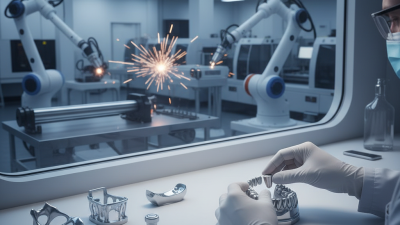
China’s leading titanium implant manufacturers should be judged by evidence, not export volume or polished factory tours. Grand View Research estimated the global dental implants market at about US$4.6 billion in 2023, with continued growth toward 2030. That expansion increases supplier choices, but it also makes comparison harder. Buyers should verify whether titanium complies with ASTM F67 or ISO 5832-2. They should request chemical composition, mechanical testing, surface-treatment records, and batch-level traceability. Small documentation gaps matter.
A serious assessment examines ISO 13485 certification scope, audit history, complaint handling, and change-control records. Biological safety should follow an ISO 10993 risk-based evaluation, not a generic certificate. NMPA registration information and post-market data can strengthen confidence, where applicable.
The WHO Global Oral Health Status Report 2022 reported that oral diseases affect nearly 3.5 billion people worldwide, creating strong clinical demand. Yet demand does not prove long-term implant performance. Independent fatigue, corrosion, sterility, and packaging tests deserve more weight than advertising claims.
Factory capacity helps, but process capability and rejection rates offer better evidence. Ask for anonymized nonconformance trends. Some manufacturers may hesitate. That hesitation is informative. No checklist is perfect; experienced purchasers can still overvalue certificates and undervalue surgeon feedback, fit consistency, and service response.
China’s Top 10 Titanium Implant Manufacturers
A responsible review of China’s top 10 titanium implant manufacturers should examine evidence, not advertising claims. Strong manufacturers usually maintain ISO 13485 quality systems and detailed production records. They also control titanium grades, machining accuracy, surface roughness, and sterilization packaging. These details matter.
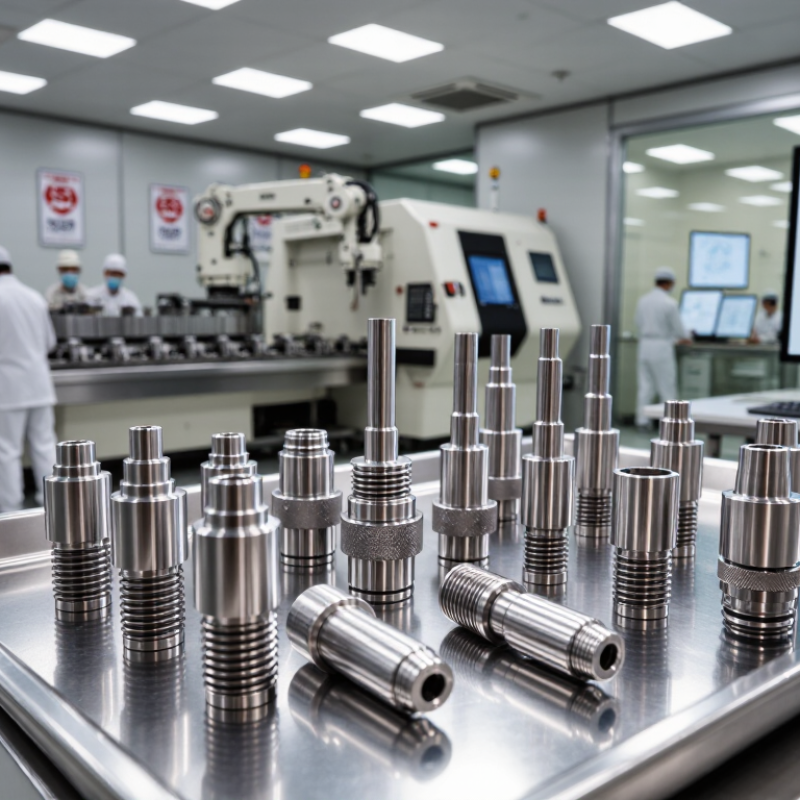
Look for documented testing on fatigue strength, corrosion resistance, biocompatibility, and dimensional consistency. A reliable factory should provide material certificates for each batch. Laser markings should remain readable after cleaning and sterilization. Production areas should appear organized, with controlled airflow and clear inspection points. Small details reveal serious work.
However, ranking ten manufacturers is not simple. Some companies excel in dental implants, while others focus on orthopedic components or surgical instruments. A large facility may still offer weak technical support. A smaller supplier may provide better traceability and faster engineering feedback. That difference deserves attention. Buyers should verify regulatory registrations, clinical documentation, export experience, and complaint-handling procedures before placing orders. Factory visits can expose gaps that brochures hide. Even experienced reviewers can miss them. Performance data may also vary between batches, so independent testing remains valuable.
China’s top titanium implant manufacturers offer more than standard dental fixtures. Their portfolios often include root-form implants, abutments, healing components, and surgical instruments. Some also produce orthopedic plates, screws, spinal cages, and craniofacial implants. Product choice depends on anatomy, surgical technique, and regulatory requirements.
Manufacturing technology varies across suppliers. CNC machining supports precise threads and connection tolerances. Advanced facilities use computer-aided design and metal 3D printing for porous structures or patient-specific parts. Surface treatments may include sandblasting, acid etching, anodizing, plasma spraying, or hydroxyapatite coatings. These methods aim to improve bone interaction, but results depend on process control and clinical evidence.
Quality systems deserve close attention. Reliable manufacturers normally document titanium grade, batch traceability, dimensional inspection, cleaning, packaging, and sterilization validation. They may also conduct fatigue, corrosion, pull-out, and biocompatibility testing. A polished catalog is not proof of long-term performance. The market is not perfectly uniform. Some product claims need stronger independent verification. Buyers should review technical files, applicable certifications, clinical data, and post-market feedback before choosing a supplier. Small details matter. A tiny mismatch can affect surgical efficiency and patient outcomes.
Titanium implant manufacturers commonly use commercially pure titanium and titanium alloys selected for strength, corrosion resistance, biocompatibility, and fatigue performance. This chart compares representative minimum tensile-strength values for widely used implant-grade titanium materials and highlights the material technologies behind products such as dental implants, orthopedic fixation devices, and joint components.
China Top 10 Titanium Implant Manufacturers? How to Compare and Select a Suitable Chinese Manufacturer
Choosing a Chinese titanium implant manufacturer requires more than comparing prices. Verify ISO 13485 certification, production scope, and current registration records. Ask for material certificates covering commercially pure titanium or Ti-6Al-4V, according to ASTM F67 or ASTM F136. A reliable factory should explain its machining, surface treatment, cleaning, packaging, and sterilization controls. During supplier audits, inspect calibration labels, batch records, and environmental monitoring logs. Small details often reveal weak systems. Grand View Research reported that the global dental implants market was valued at approximately USD 4.6 billion in 2023, with continued growth expected through 2030. This expansion increases competition, but it does not guarantee consistent quality.
Compare suppliers through documented evidence, not polished presentations. Request three recent batch samples and review dimensional inspection data, surface roughness results, and traceability records. Check whether testing is performed internally or by an independent laboratory. Ask about complaint handling, corrective actions, lead times, and minimum order quantities. A useful comparison also includes engineering support and communication speed. A low quotation may exclude tooling, validation, or special packaging costs. That matters later.
Tips: Build a weighted scorecard before contacting manufacturers. Give quality systems and traceability higher scores than unit price. Confirm certificates directly with the issuing body when possible. Review the latest International Organization for Standardization and regulatory requirements for your target market. I would not trust a supplier based on one successful sample; production consistency is harder to prove. Allow time for an on-site or remote audit.
| No. | Comparison Dimension | Evidence to Request from a Chinese Manufacturer | Practical Benchmark or Verifiable Requirement | Why It Matters When Selecting a Supplier |
|---|---|---|---|---|
| 1 | Quality Management SystemHighest Priority | Current quality certificates, certification scope, certificate validity, audit history, and the manufacturing sites covered by the certificate. | ISO 13485 certification should cover the relevant medical-device activities and the actual production site. Verify the certificate directly with the issuing certification body where possible. | A valid quality system supports controlled production, traceability, corrective actions, document control, and consistent product release. |
| 2 | Titanium Material Grade and Traceability | Material certificates, heat or lot numbers, supplier records, chemical composition reports, and incoming inspection procedures. | Common implant materials include commercially pure titanium and titanium alloys specified by standards such as ASTM F67 or ASTM F136. Every production lot should be traceable to its material certificate. | Material grade, purity, alloy composition, and traceability influence biocompatibility, mechanical performance, and regulatory documentation. |
| 3 | Design and Engineering Capability | Design-control procedure, engineering change records, drawings, tolerance capability, risk-management files, and non-confidential sample development records. | The supplier should be able to manage design inputs, verification, validation, risk analysis, and controlled engineering changes in accordance with the intended regulatory pathway. | A capable engineering team reduces design errors and makes it easier to adapt implant geometry, surgical instruments, packaging, and labeling to project requirements. |
| 4 | Machining and Process Control | Process flow charts, equipment list, preventive-maintenance records, inspection plans, calibration records, and capability data for critical dimensions. | Critical dimensions should be measured with calibrated equipment. CNC machining, deburring, cleaning, and inspection processes should be documented and validated when required by risk assessment. | Stable process control helps maintain fit, thread accuracy, surface integrity, and repeatability across production batches. |
| 5 | Surface Treatment and Surface Characterization | Details of blasting, acid treatment, anodizing, coating, or other surface processes; process parameters; cleaning records; and surface-test reports. | Ask for objective data such as roughness, coating thickness where applicable, adhesion or integrity results, contamination controls, and batch-specific inspection records. | Surface condition affects osseointegration, corrosion behavior, cleanliness, and the consistency of clinical performance. |
| 6 | Biocompatibility and Safety Testing | Biological evaluation plan, laboratory qualifications, test reports, toxicological assessment, and the rationale for the selected ISO 10993 endpoints. | Testing should be risk-based and appropriate to the final device, materials, manufacturing residues, patient contact type, and duration of contact. Reports should identify the tested product and laboratory. | Biocompatibility evidence helps demonstrate that the finished implant does not create unacceptable biological risks under its intended use. |
| 7 | Sterilization and Cleanliness Capability | Sterilization method, validation summary, bioburden and endotoxin controls, environmental-monitoring records, cleaning validation, and sterile-barrier information. | If supplied sterile, the sterilization process and packaging system should be validated for the product. If supplied non-sterile, cleaning and packaging controls must still be clearly defined. | Residual contamination, inadequate cleaning, or an unsuitable sterile barrier can create serious patient-safety and compliance risks. |
| 8 | Regulatory and Export Documentation | Device classification, product registration information where applicable, declaration of conformity, technical documentation index, labeling samples, and export-market experience. | Documentation must match the exact product, intended use, manufacturing site, and target market. Do not rely only on a general company certificate or unrelated product approval. | Accurate regulatory files reduce import delays and support registration, distributor qualification, and post-market obligations. |
| 9 | Capacity, Lead Time, and Supply Continuity | Production capacity by product type, monthly output estimates, standard and customized lead times, capacity-planning method, and backup arrangements for critical processes. | Request a written production schedule and define order quantities, forecast requirements, safety-stock expectations, and notification procedures for delays or material changes. | Reliable supply planning is essential for surgeries, distributor inventory, product launches, and continuity of patient care. |
| 10 | Inspection, Service, and Commercial Transparency | Incoming, in-process, and final inspection records; sample inspection policy; complaint handling procedure; warranty terms; pricing structure; and payment conditions. | Agree in writing on acceptance criteria, inspection sampling, nonconforming-product handling, change notification, complaint response time, and ownership of tooling or custom designs. | Transparent commercial and service terms reduce disputes and provide a practical framework for long-term cooperation. |