Why Are Spinal Implants Used in Spine Surgery?
Spinal Implants are used to support, align, or stabilize the spine when a condition or operation leaves it mechanically unstable. They may include screws, rods, plates, cages, or artificial discs. A surgeon’s choice depends on the diagnosis, anatomy, bone quality, and surgical plan. The hardware is not the treatment by itself.
The need is significant, but not every patient needs an implant. The Global Burden of Disease study, published in The Lancet Rheumatology, estimated that 619 million people had low back pain in 2020 and projected 843 million cases by 2050. Those figures describe a health burden, not the number of people who need surgery. That distinction matters. Dr. Richard Deyo, a physician and prominent spine-health researcher, has emphasized in his published work that evidence for spinal fusion is limited for many forms of low back pain. His caution is useful: an implant should serve a clear clinical purpose, not simply accompany a diagnosis.
In practice, implants can help maintain alignment while bone heals after a fusion, or provide support after certain fractures or deformity procedures. A cage may sit between vertebrae; screws and rods can hold the planned position. Yet devices also carry risks, including infection, loosening, and failure to relieve symptoms. Results vary. The key question is not whether an implant is available, but whether its expected benefit justifies its risks for this particular patient. A careful conversation about alternatives, recovery, and uncertainty belongs before surgery. It can be uncomfortable. It is still necessary.
The Role of Implants in Spinal Anatomy and Stability
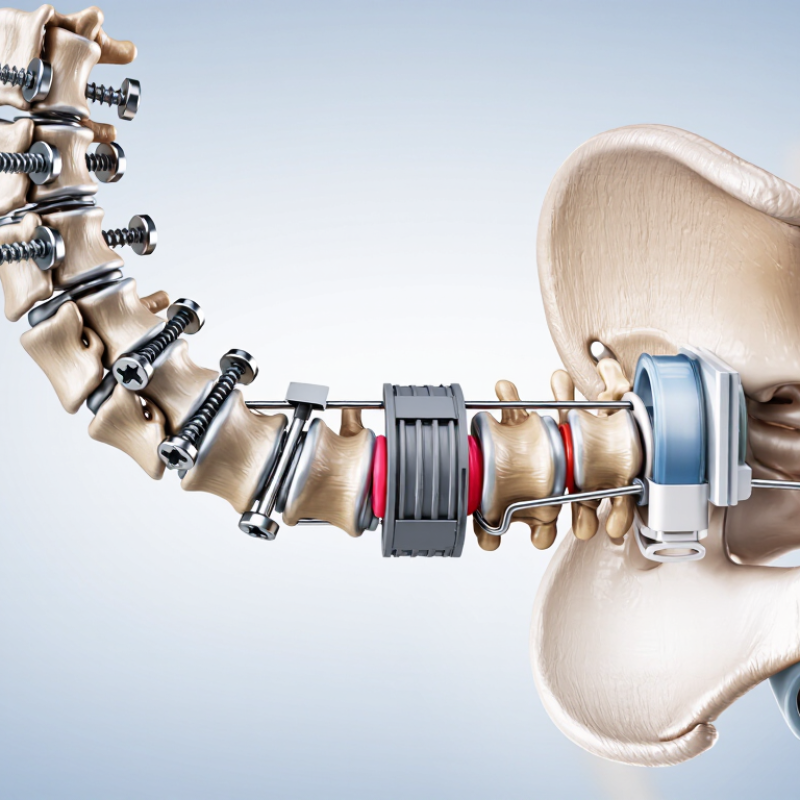
The spine is a column of bones, discs, joints, and supporting ligaments. Together, these structures protect the spinal cord and allow controlled movement. When a damaged disc or unstable vertebra affects that balance, an implant may help support the spine. Stability matters. Screws and rods can hold vertebrae in position, while a cage may maintain space between vertebrae after a damaged disc is removed.
These devices do not replace the spine’s natural anatomy. They provide support while bone grows across the treated area, when spinal fusion is part of the plan. A plate, rod, or cage is selected according to the location and purpose of surgery. The goal may be to limit painful motion, preserve alignment, or protect nearby nerves. The picture is not always tidy: one patient may need support at a single level, while another needs a different approach.
Implants also have limits. They cannot restore every function or guarantee that pain will disappear. Bone quality, overall health, and the exact spinal condition can affect healing and implant stability. Surgeons weigh these factors against possible risks, such as infection, nerve injury, or failure of the bones to fuse. Follow-up visits and imaging help clinicians check alignment and healing over time. A clear discussion of expected benefits and uncertainties helps patients understand why an implant is being considered.
Conditions That May Require Spinal Implants
Spinal implants may be considered when a condition makes the spine unstable or when surgery needs support during healing. A vertebral fracture can weaken the spine, especially after significant injury or when bone is fragile. Implants may also help stabilize vertebrae affected by spondylolisthesis, where one bone slips out of position. Not every fracture or slip needs hardware. The decision depends on symptoms, imaging, bone quality, and overall health.
Some people with scoliosis or other spinal deformities may need implants to help correct alignment and hold it in place. In certain cases of degenerative disease, a surgeon may recommend fusion after removing bone or tissue that presses on nerves. Screws, rods, plates, or cages can support the affected area while bone grows. This process takes time. It does not guarantee that pain will disappear.
Tumors or infections that damage vertebrae can also leave the spine unstable, sometimes requiring reconstruction and implants. These situations call for individualized planning, since the disease and its treatment can affect healing. The line between needing support and avoiding unnecessary hardware is not always clear. A spine specialist weighs examination findings and scans against risks such as infection, nonunion, or implant failure. Patients can ask why an implant is proposed and what alternatives may fit their specific condition.
Common Types of Spinal Implants
Common types of spinal implants include screws, rods, plates, cages, and artificial discs. Each serves a different purpose. Screws anchor into vertebrae, while rods connect them to help stabilize a section of the spine. Plates may support the front of the neck after certain procedures.
Interbody cages are placed between vertebrae after a damaged disc is removed. They help maintain space and may be filled with bone graft material to support fusion. A surgeon may use a small cage in the lower back or a slimmer one in the neck, depending on the anatomy and procedure. Fit matters. These devices are not interchangeable.
Artificial discs are another option for some people. They are designed to preserve motion at a treated level, unlike fusion implants, which hold bones still while they heal together. The choice depends on factors such as the condition being treated, bone quality, and overall health. Imaging helps guide planning, but it does not tell the whole story. Patients should ask what each implant is meant to do, what limitations to expect, and how healing will be monitored. Even familiar devices can behave differently from one person to another.
How Implants Support Spinal Procedures
Spinal implants provide internal support when the spine needs stability during healing or correction. Screws and rods hold vertebrae in position; interbody cages maintain space between them and can help support bone fusion. In a typical procedure, the surgeon checks alignment and secures the hardware while protecting nearby nerves. The implant does not heal the bone by itself. It helps limit unwanted movement while healing takes place.
Use should match the patient’s condition.
A Medicare analysis published in JAMA by Deyo and colleagues found lumbar fusion rates among older adults rose 2.4-fold from 2002 to 2007; complex fusions rose 15-fold. That increase describes practice, not proof that every patient benefits.
A randomized Swedish study of 247 patients with lumbar spinal stenosis found that adding fusion to decompression did not improve disability or walking outcomes at two years. Hospital stays were longer with fusion: 7.4 days versus 4.1 (Försth et al., New England Journal of Medicine, 2016). The details matter. Implants can be valuable when instability or deformity calls for added support, but they also introduce risks, including infection, loosening, and added recovery demands. Choosing hardware is not a box-checking step; the reason for using it should be clear.
Benefits and Risks of Using Spinal Implants
Spinal implants, such as screws and rods, help hold vertebrae steady while bone grows together. Surgeons may use them for instability, fractures, deformity, or selected cases of painful spinal degeneration. A stable segment can reduce unwanted movement and support alignment. That can make daily tasks, like standing from a chair, more manageable during recovery. But implants do not guarantee pain relief. The underlying nerve or joint problem may remain.
There are trade-offs. Risks include infection, bleeding, nerve injury, failure of the bones to fuse, and loosening or breakage of hardware. Fusion can also place extra stress on nearby spinal levels.
In the 2021 NORDSTEN-DS trial, 71.4% of patients receiving decompression alone and 72.9% receiving decompression with fusion achieved a meaningful improvement in disability at two years. The results suggest fusion is not necessary for every patient with degenerative slippage.
A careful assessment matters. Imaging, symptoms, bone health, smoking history, and the exact diagnosis all shape the decision. Even then, predicting one person’s outcome remains imperfect. A second opinion can help clarify why an implant is being proposed.